When an earthquake, flood or humanitarian crisis occurs, the instinct is to do something immediately. It is a good instinct, but that haste can make your help powerful or useless. Donating well in an emergency means resisting two temptations — improvising and sending the first thing to hand — and making a few simple choices that multiply the effect of what you give.
Money usually helps more than unrequested parcels
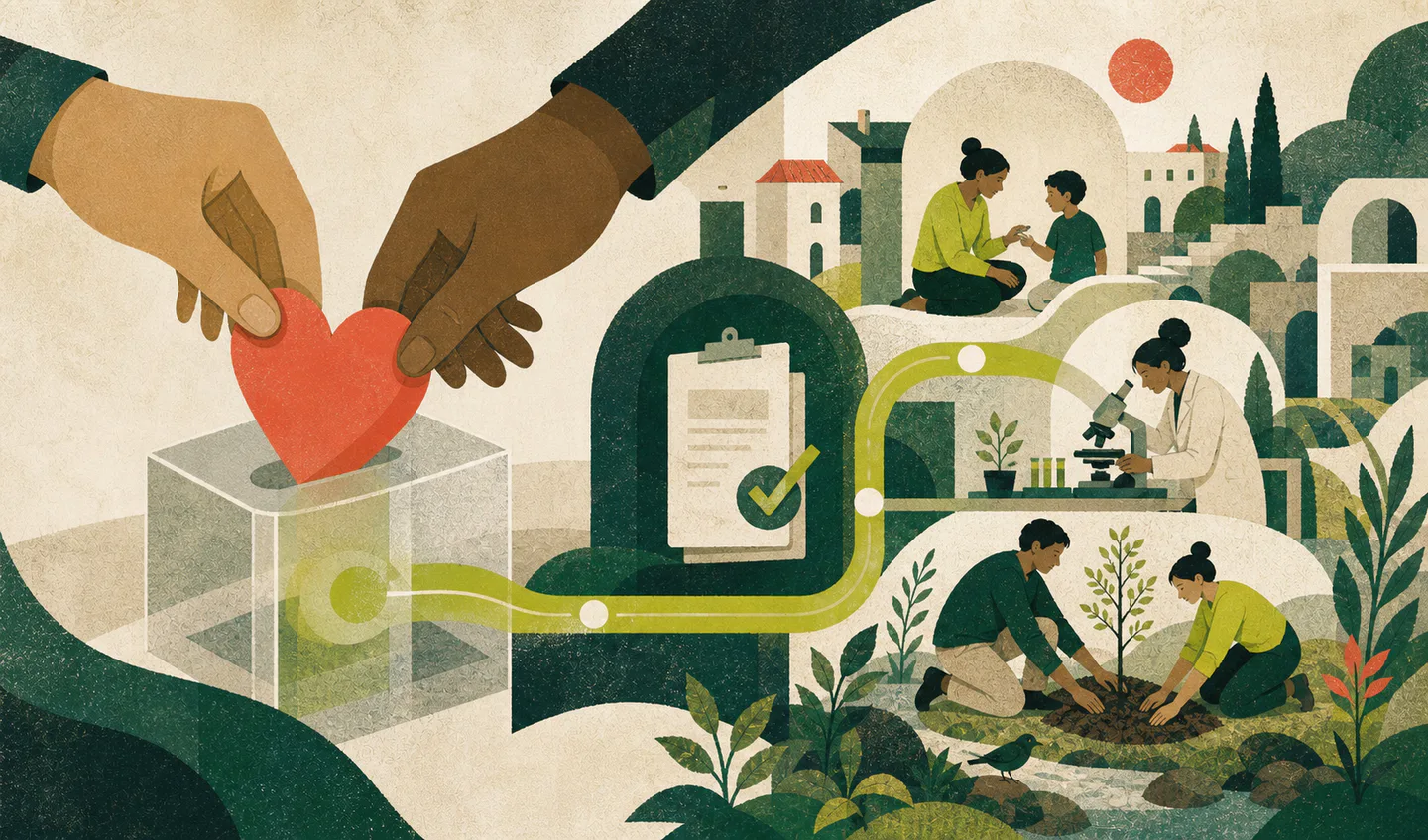
It may feel counterintuitive, but in the first phase of an emergency serious organizations usually ask for money rather than unrequested material goods. Cash is immediate and flexible: it allows the purchase locally of exactly what is needed at that time — water, blankets, medicines and needs you may not imagine from afar.
Give money | Give unrequested goods |
|---|---|
Arrives immediately and becomes what is needed now | Must be collected, transported, stored and sorted |
Can support the affected local economy | Can clog relief logistics |
Adapts as needs change daily | May be the wrong thing at the wrong time |
Where possible, buying locally has another positive effect: it can help shops and suppliers in the affected area start moving again, and they are part of the community that needs to recover. In other words, a monetary donation works twice.
The mountains of used clothes sent after many disasters have become a textbook case: they arrive, often are not needed, and someone must even dispose of them. If an organization asks for specific goods, give them; otherwise, give money.
Other forms of help, in the right place
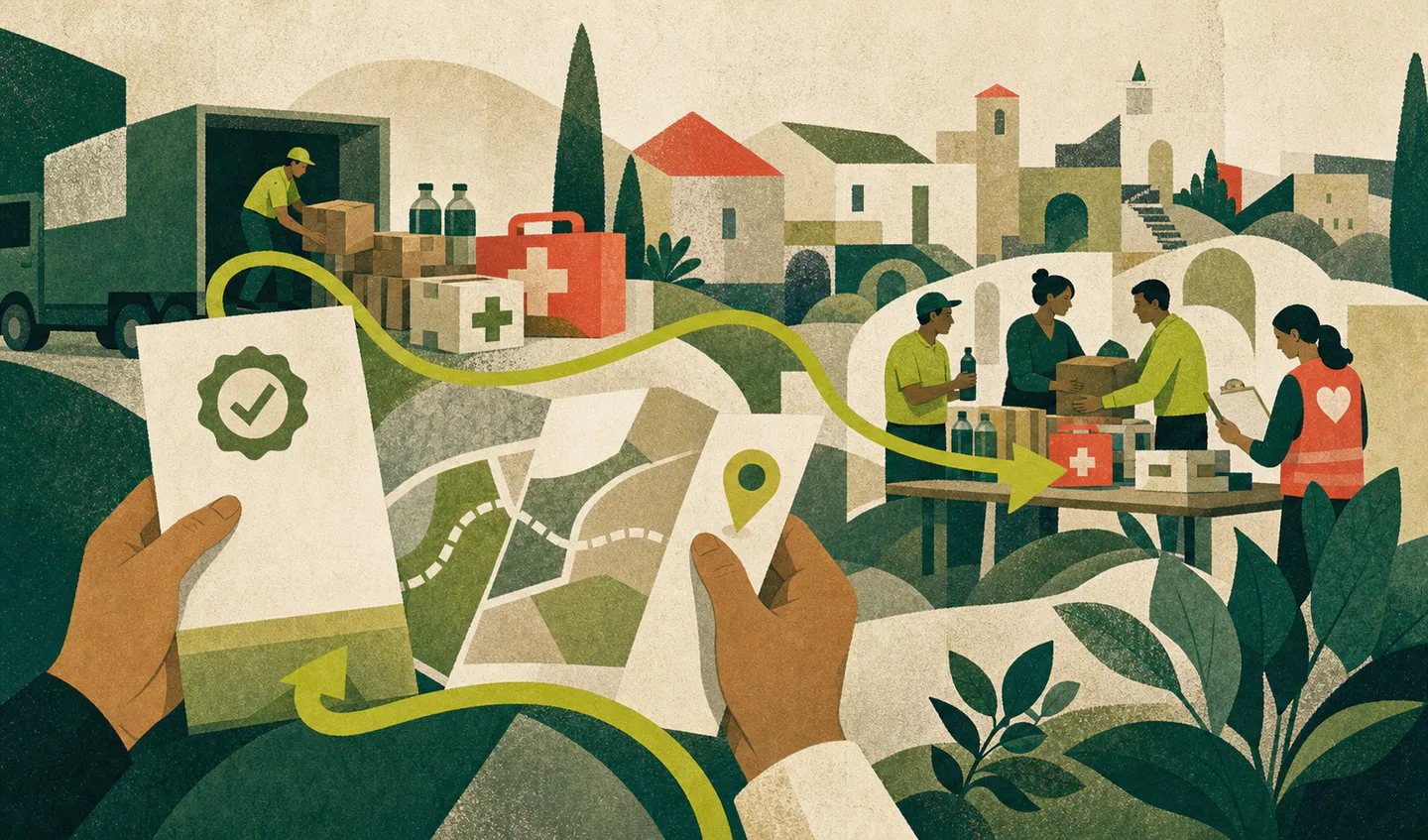
Money is the first response, but not the only one. The point is to channel every form of help to where it is genuinely requested, rather than deciding for yourself what is needed.
Material goods: only when an organization explicitly requests them.
Blood: invaluable, but follow the instructions of health authorities, hospitals or accredited associations.
Time and practical help: emergency volunteering must go through organized channels. Arriving alone, even with the best intentions, can obstruct rescue work.
Each phase needs a different kind of support
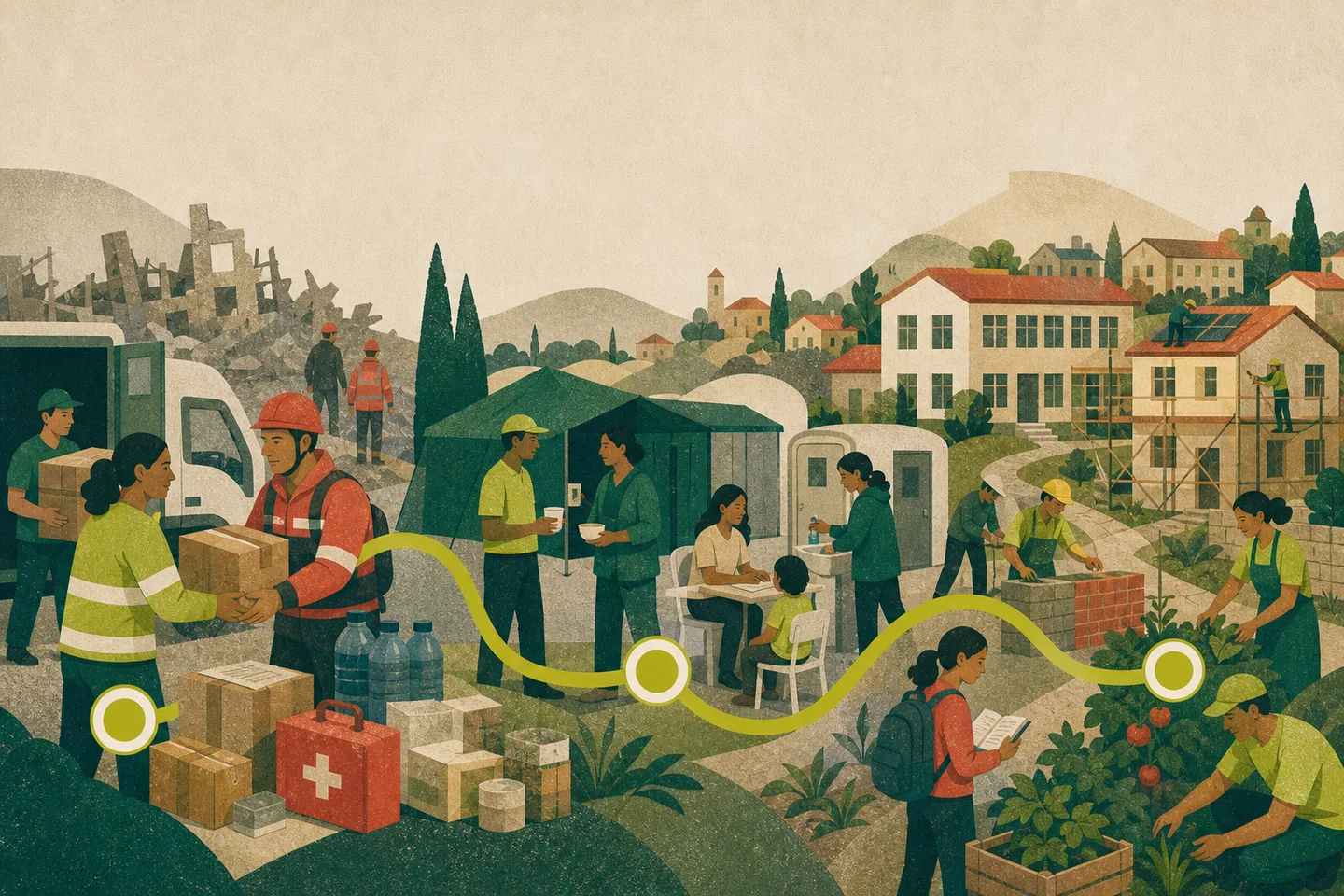
An emergency is not a single moment: it is a sequence, and the useful form of support changes along the way. Understanding that helps you decide when and how to give.
Phase | What is needed | How you can help |
|---|---|---|
Immediate rescue | Rescue and first essentials | Cash gifts to organizations already operating |
Prolonged emergency | Housing, assistance and basic services | Ongoing support, even modest |
Recovery | Homes, schools, work and communities | Medium- and long-term donations |
Recovery is the most neglected and often the longest phase. It is where many organizations are left alone after public attention moves elsewhere.
Rely on people already on the ground
Emergency is not the time to experiment. Organizations already active in the affected area, or with solid experience in that kind of crisis, have contacts, infrastructure and procedures. In Italy they also operate within coordinated relief systems. A rooted organization can activate real support in hours; an initiative born yesterday starts from zero when time is scarce.
Be wary of fundraisers that appear from nowhere in the hours after a disaster. Some are well meant but improvised; others are outright scams. An emergency is a fraudster’s preferred habitat because emotion is high and verification is low. The three rules matter more than ever: the organization exists and can be checked, the channel is official, and the payment is traceable. Full details are in the guide to donating safely.
Official charity numbers
During major emergencies in Italy, a coordinated charity number is often activated: you donate a few euros by text message or a call from a landline. It is convenient and legitimate, but the same caution applies — make sure it is the official number announced by organizations or reliable media, not an arbitrary number forwarded in a message. When authentic, it is one of the fastest, lowest-risk ways to contribute.
Do not amplify confusion
Emergencies generate unverified appeals, photographs and requests that spread fast because they provoke emotion. Before forwarding a fundraiser, pause and check who is behind it. Sharing a false appeal in good faith can still help a fraudster find new victims. Verified information is valuable; sharing everything is not.
Need does not end with the news cycle
This is the part almost everyone forgets. Attention gathers in the first days while the emergency is front-page news; then the cameras leave, but reconstruction lasts for years. It is often afterwards, in the quiet phase, that organizations find it hardest to raise funds.
If you can, do not give only on the wave of emotion. Even a small donation spread over time, or support that starts again a few months later, is immensely valuable precisely when no one is looking.
There is also a matter of trust: avoid restricting your help too rigidly. Experienced organizations know where it is most needed, and excessive conditions can tie resources to a need that has already been met while others remain uncovered. In return, a serious organization reports how it used the funds.
Three questions before giving in a hurry
If you feel the urge to give immediately, take thirty seconds to answer these:
Who exactly is collecting? An identifiable, verifiable organization, or a generic name that appeared yesterday?
Was it already active on this cause or in this area? In an emergency, experience is half the value.
Am I paying traceably through an official channel? If the answer is no, stop.
If the appeal passes this test, give with confidence. If it does not, your help deserves to go elsewhere.
Where to begin
If you want to support people working on a particular emergency or in a particular area, begin with identifiable, verifiable organizations rather than a link you happened to receive. On NonProfit.it you can find organizations by cause and location, compare them and reach their official websites, where you can donate safely using the correct details.
Generosity is almost never what an emergency lacks; clear thinking sometimes is. Give money, choose people who already know what to do, do not repeat what you have not verified, and remember what comes afterwards. They are simple actions, and they make the difference between help that counts and help that is lost.